
Roof Assemblies and System Types
Most commercial low-slope roof decisions start with the membrane or assembly family. PVC, TPO, EPDM, and modified bitumen each have advantages that make them a better fit for certain buildings, exposures, and budgets.
ERC supports these roof types with wind-vented assembly pathways designed to strengthen attachment under wind uplift and support moisture management in qualified roof assemblies. If moisture is suspected, the first step is confirming conditions and choosing the right scope, not pushing a single product.


Explore Roof Assemblies and System Options
Use the summaries below to compare common commercial low-slope roof types.
PVC (Polyvinyl Chloride)
Key Advantages
Heat-Welded Seam Strength
Chemical, Grease, and Oil Resistance
Durability for Demanding Environments
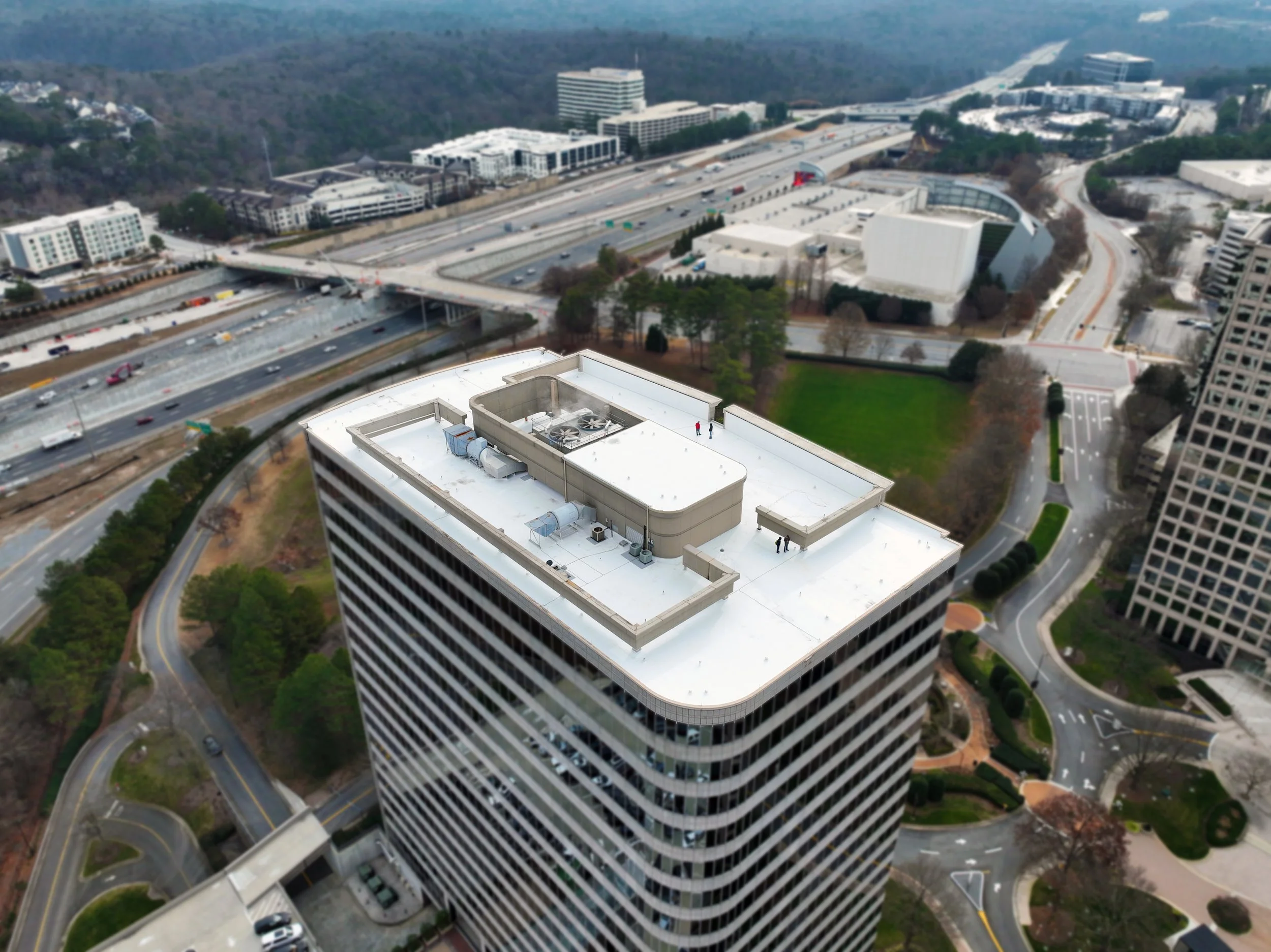
PVC is frequently selected when chemical exposure and seam performance are primary concerns, including roofs that see grease, oils, or industrial conditions. Heat-welded seams create a continuous watertight bond that performs well in demanding environments.
TPO (Thermoplastic Polyolefin)
Key Advantages
High Reflectivity and Energy Efficiency
Cost-Effective Performance
Heat-Welded Seams With Flexible Handling
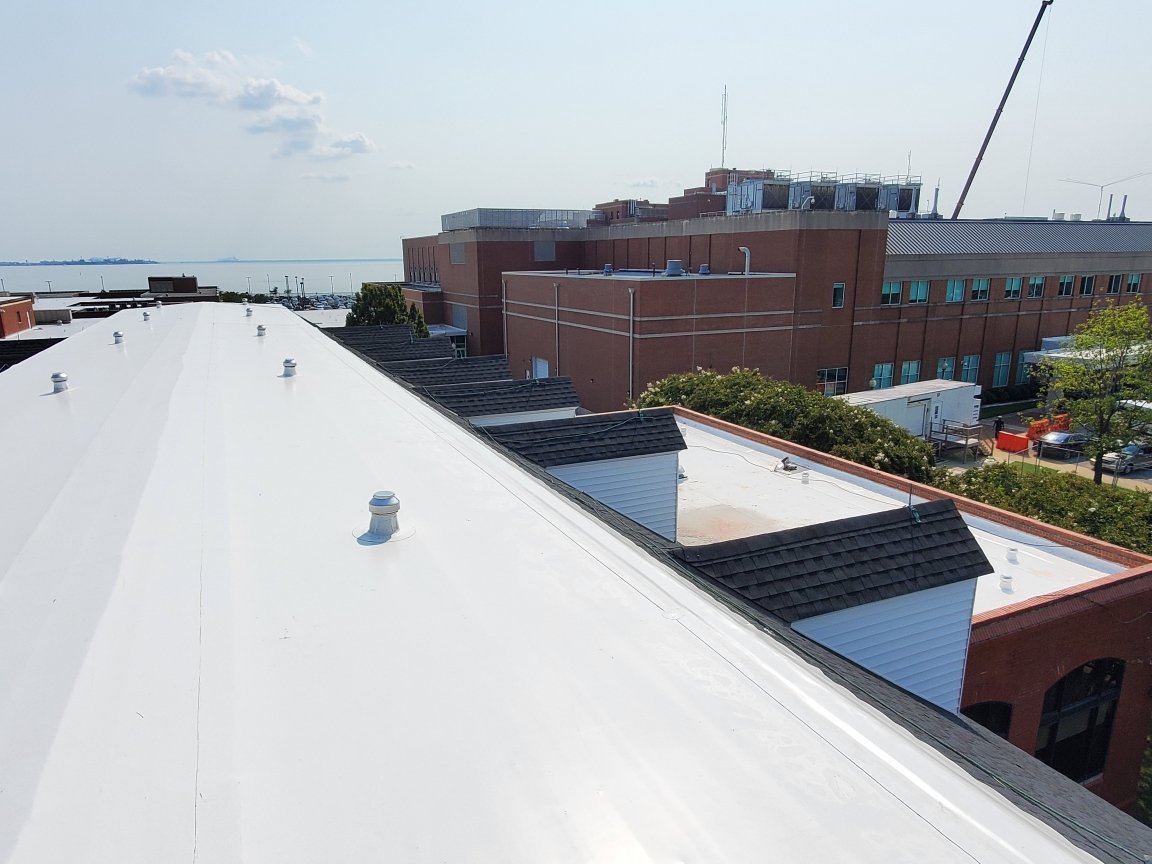
TPO is often chosen for its balance of reflectivity, performance, and cost. The reflective surface can support cooling efficiency goals, while welded seams provide strong watertight integrity across large commercial roof areas.
Modified Bitumen Roof Assemblies
Key Advantages
Multi-Ply Strength and Redundancy
Multiple Installation Methods (Torch, Hot Asphalt, or Cold Process)
Durable Waterproofing for High-Use Roofs
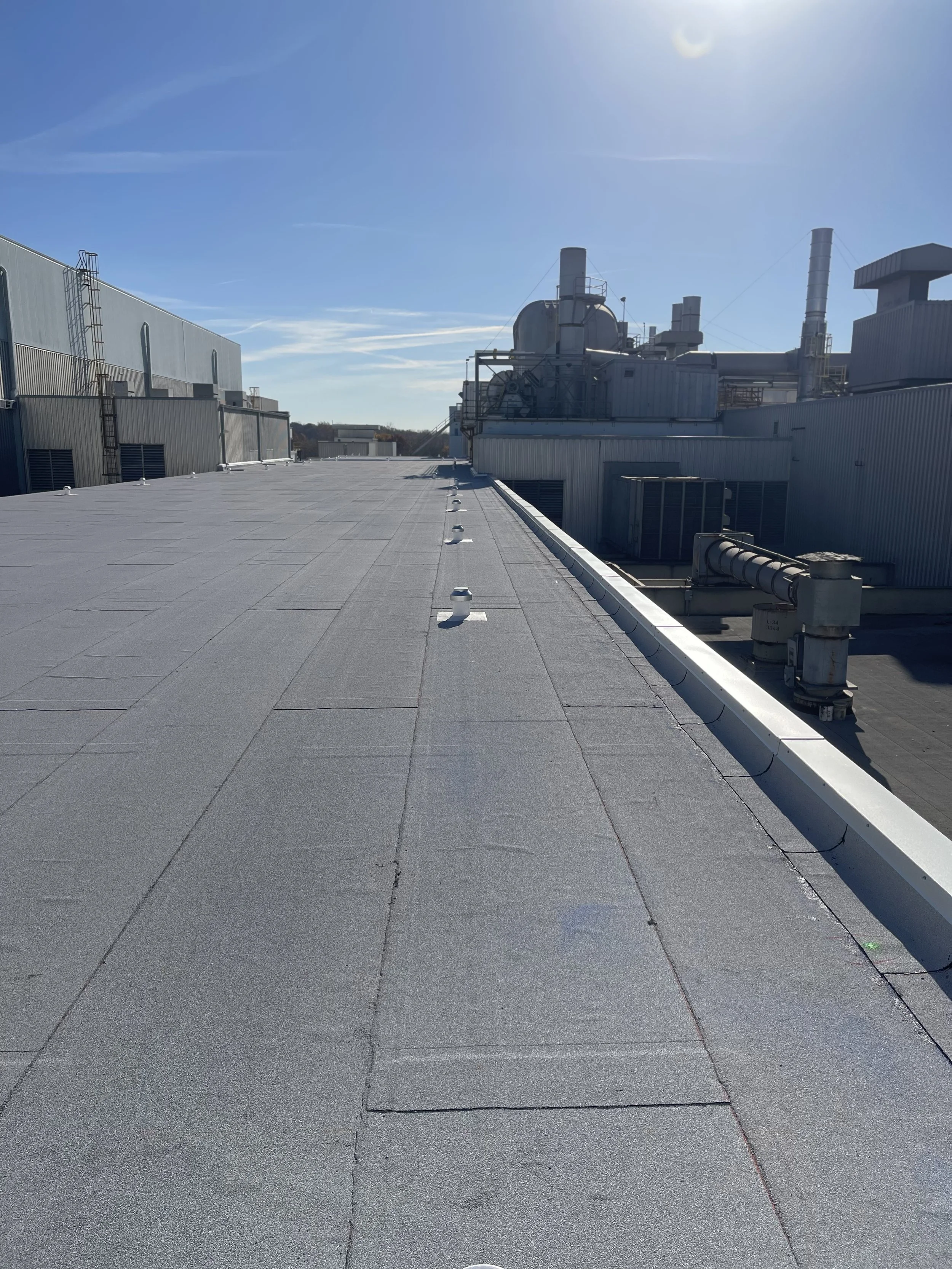
Modified bitumen is a robust multi-ply roof assembly often selected for redundancy and toughness, especially on roofs that see maintenance traffic or demanding service conditions. Because installation methods vary, scope planning and detailing alignment are essential.
EPDM (Ethylene Propylene Diene Monomer)
Key Advantages
Long Service Life and Strong Value
Excellent Resistance to UV, Ozone, and Temperature Swings
Straightforward Maintenance and Repair
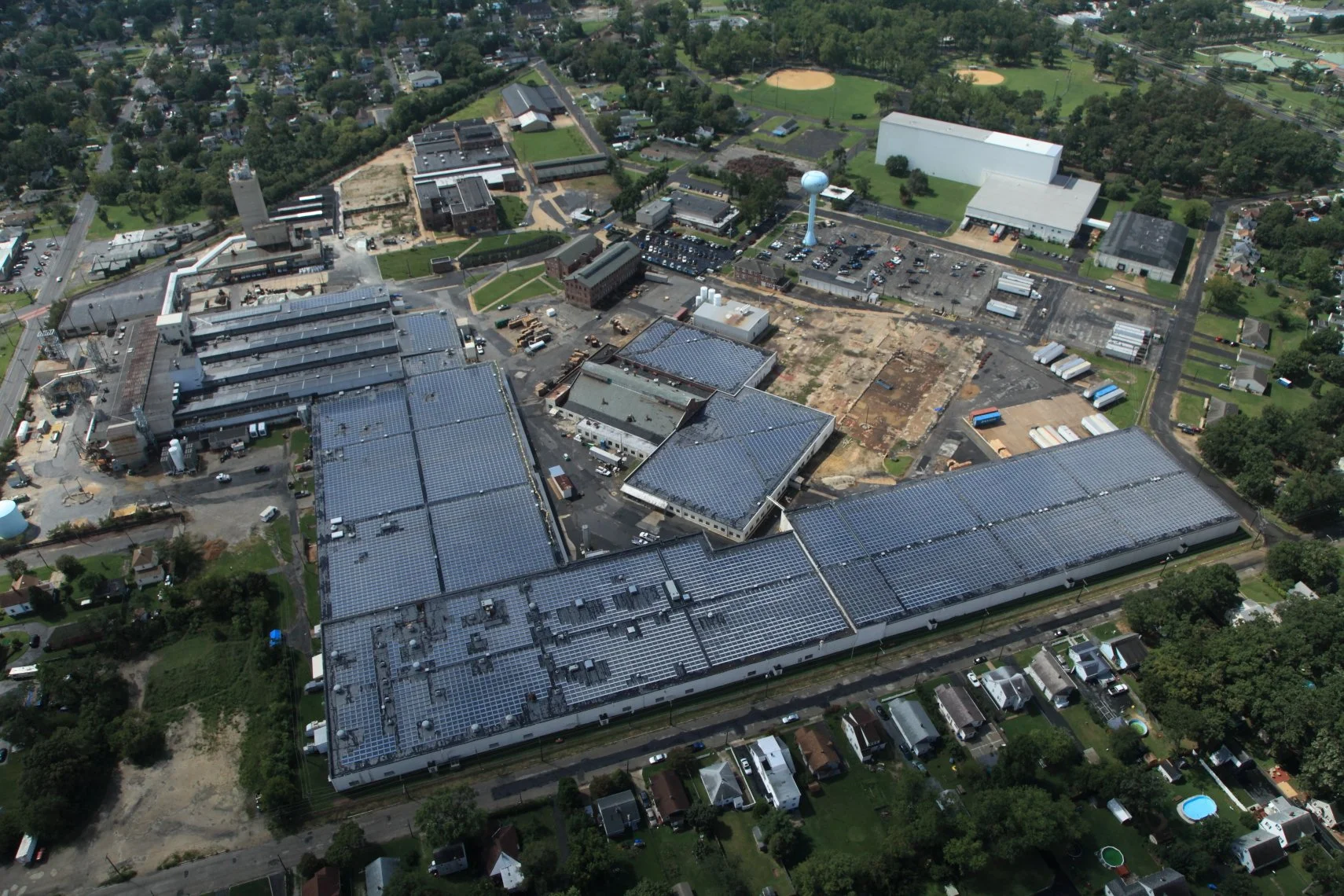
EPDM is known for long-term durability and strong performance through temperature extremes, UV exposure, and ozone. It is commonly selected by owners who prioritize longevity and a roof that is serviceable and straightforward to repair over time.
L.A.B.S. (Liquid-Applied Breathable System)
Key Advantages
Breathable Recovery Approach for Moisture Management
Supports Tear-Off Avoidance on Qualified Roofs
Reduced Disruption for Occupied Buildings and Tight Schedules
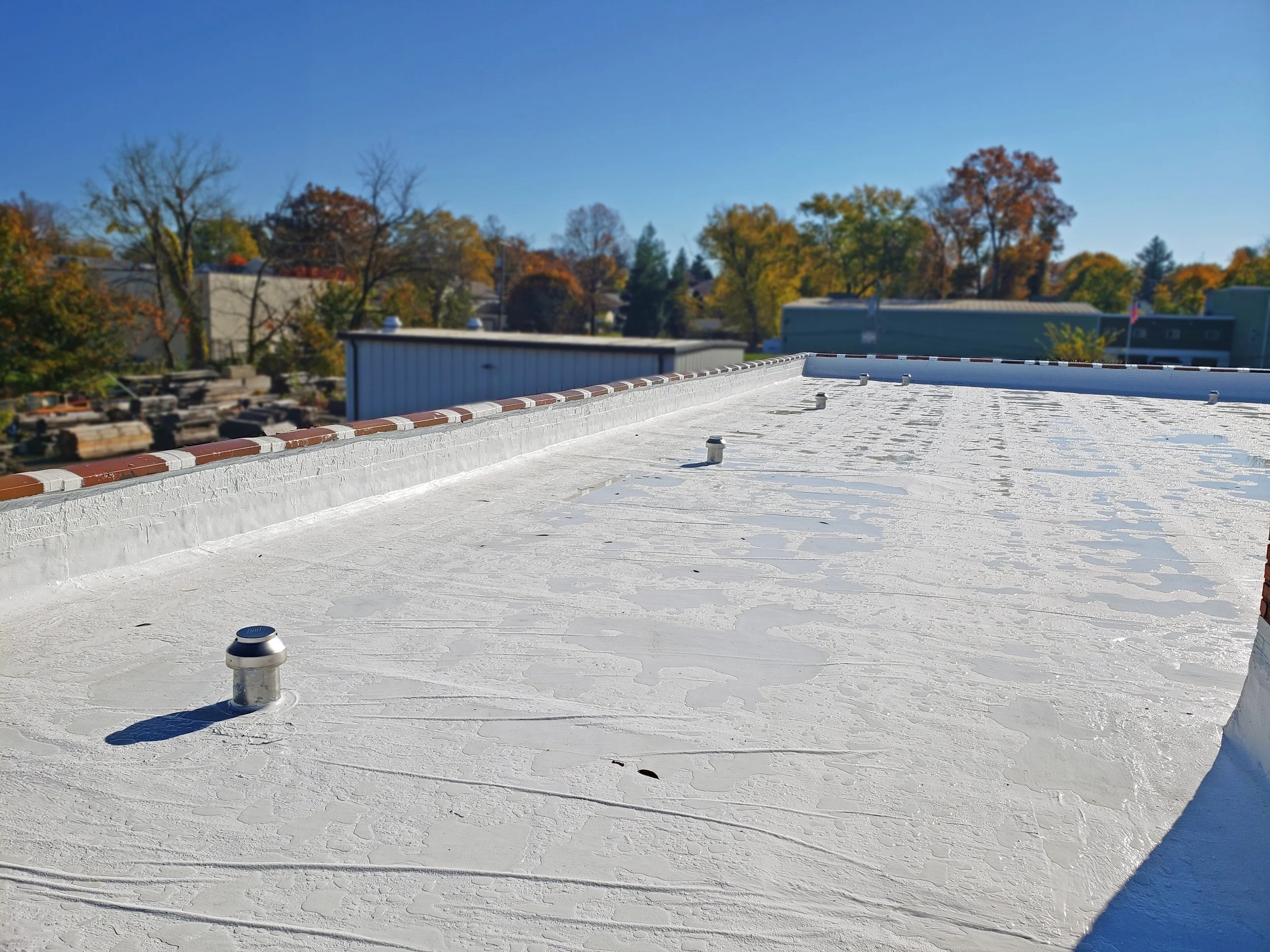
L.A.B.S. is a breathable, liquid-applied recovery system used when the roof scope is driven by trapped moisture and the goal is to pursue a defensible recovery path instead of an automatic tear-off, when conditions qualify. It is typically considered when maintaining building operations matters, waste reduction is a priority, and the project team needs a pathway supported by documentation and warranty options for qualified assemblies.


Moisture Management and Recovery Planning
Moisture is common in commercial low-slope roofs, and it does not automatically mean a full tear-off is required. The right approach starts with confirming conditions, understanding moisture scope, and choosing a recovery or replacement pathway that matches building goals, timeline, and risk profile.
ERC supports moisture management through wind-vented assembly strategies and recovery pathways, along with documentation resources that help teams make defensible scope decisions. Moisture removal is not a shortcut, it is a scope decision supported by documentation and qualification

Warranty Options Built Around Real-World Risk
A commercial roof decision is a risk decision. Wind exposure, building use, moisture conditions, and installation requirements all impact long-term performance. ERC supports qualified wind-vented assemblies with warranty options designed to match how commercial projects are specified, installed, and managed over time.
This is not a one-size-fits-all promise. Warranty options are tied to approved assemblies, documentation, and installation standards, so owners and specifiers can align coverage with the actual demands of the building. From standard coverage pathways to specialty riders for high-wind environments and recovery-focused scopes, ERC helps project teams select the right warranty structure and the right system approach from the start.
What Our Warranty Options Can Include
NDL coverage options for qualified assemblies
Wind speed rider options for high-wind risk profiles
Roof drying rider option for recovery projects where conditions qualify
Clear documentation requirements to support submittals and long-term protection
Warranty terms vary by assembly type and project conditions. ERC will help confirm eligibility and documentation needs during design and submittal.