
What Is Wind-Vented Roofing?
Wind-vented roofing is a commercial low-slope roof approach designed to respond to wind pressure instead of only resisting it. When wind moves across a roof surface, it can create negative pressure that tries to lift the roof assembly. A wind-vented assembly is engineered to manage those pressure dynamics so the roof can perform more predictably under wind uplift conditions.
This page explains the concept in plain terms, shows why it matters, and helps you decide what to do next if you are an owner, consultant, or contractor evaluating a roof system.


How Wind Uplift Works on Commercial Roofs
Wind uplift is driven by pressure differences. As wind speed increases over a roof surface, pressure can drop above the roof, which creates uplift forces that try to separate the roofing assembly from the deck. This is commonly explained through the Bernoulli principle and pressure differentials.
Uplift demands are often highest at roof corners and perimeters. That is why attachment methods, edge conditions, and overall assembly design matter as much as the membrane itself.
Wind uplift is not only a membrane issue. It is an assembly issue.

How Wind Venting Works
A wind-vented roof assembly uses engineered venting components to manage pressure dynamics within the roof system. Instead of allowing negative pressure to continuously pull upward on the assembly, the design redirects how pressure is handled across the system.
In simple terms, a wind-vented approach is designed to reduce the conditions that drive uplift separation and help the assembly stay engaged as wind forces rise. The exact assembly design and detailing depend on the roof type and the project scope.

What Makes Wind-Vented Roofing Different
Most conventional assemblies fight uplift by increasing attachment density, adhesive, and material. That can be effective, but it can also increase cost and complexity, and it does not change the underlying pressure dynamics.
Wind-vented roofing introduces a different approach. It focuses on how the roof system behaves under wind pressure so performance is not only dependent on adding more materials. For teams specifying performance in high-wind regions, this shifts the conversation from products to assembly strategy.
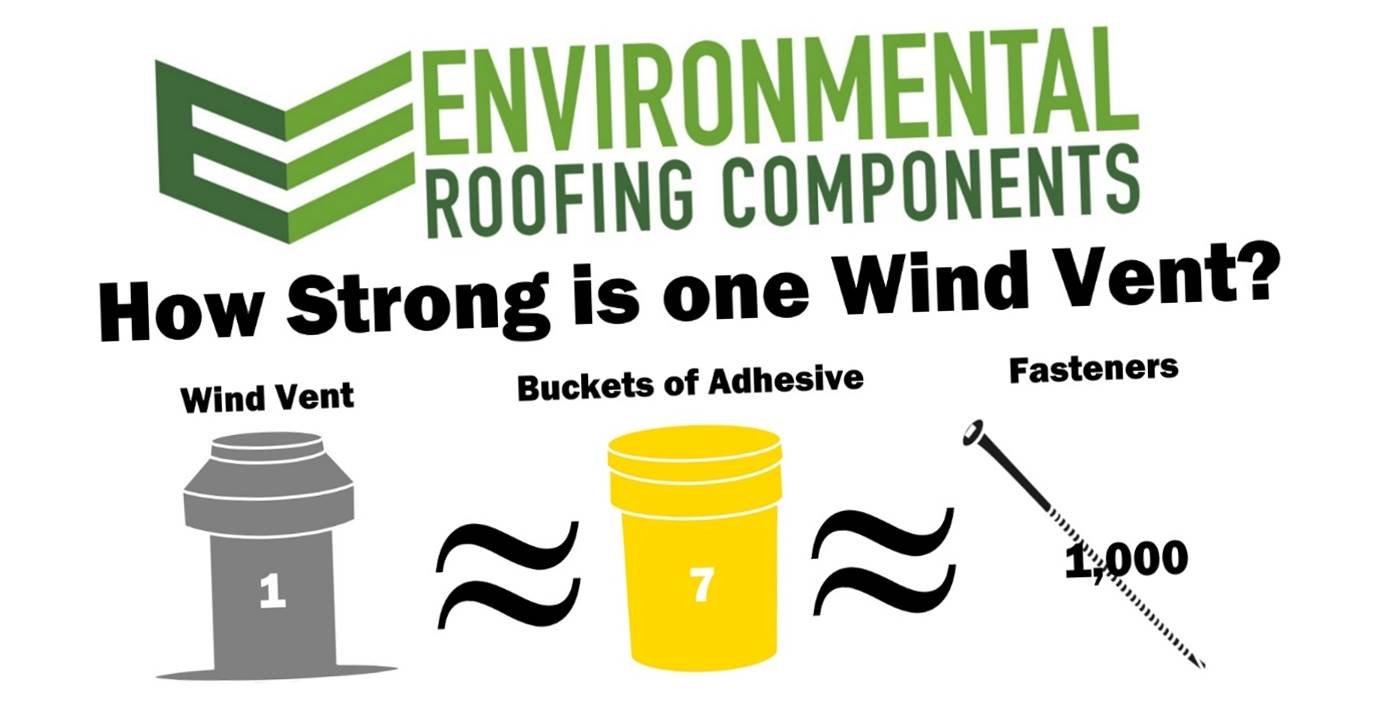
Over a 2,100 SF roof section, the ERC Wind Vent delivers the equivalent holding power of 1,000 fasteners or the stability of 7 buckets of adhesive. That performance means stronger attachment with fewer materials, making the ERC Wind Vent system a more efficient and cost-effective approach for commercial roof assemblies.

Warranty Options Built Around Real-World Risk
A commercial roof decision is a risk decision. Wind exposure, building use, moisture conditions, and installation requirements all impact long-term performance. ERC supports qualified wind-vented assemblies with warranty options designed to match how commercial projects are specified, installed, and managed over time.
This is not a one-size-fits-all promise. Warranty options are tied to approved assemblies, documentation, and installation standards, so owners and specifiers can align coverage with the actual demands of the building. From standard coverage pathways to specialty riders for high-wind environments and recovery-focused scopes, ERC helps project teams select the right warranty structure and the right system approach from the start.
What Our Warranty Options Can Include
NDL coverage options for qualified assemblies
Wind speed rider options for high-wind risk profiles
Roof drying rider option for recovery projects where conditions qualify
Clear documentation requirements to support submittals and long-term protection
Warranty terms vary by assembly type and project conditions. ERC will help confirm eligibility and documentation needs during design and submittal.