
Roof Moisture Removal Study


Project Overview and Documentation Method
This case study documents a roof recovery scope in Macclenny, Florida, where moisture was identified in an existing modified built-up roof (BUR) with lightweight concrete. To document conditions and support a defensible scope decision, ERC partnered with RAM USA to perform aerial infrared thermography prior to installation and again two years later for follow-up verification.
Hidden moisture is one of the most expensive variables in commercial roofing because it can drive replacement decisions, energy loss, and operational risk without being visible from the surface. RAM Companies notes that unseen moisture damage costs U.S. building owners billions of dollars in reroofing, repairs, energy losses, asset depreciation, and other downstream impacts. (RAM Companies)

Project Snapshot and Existing Conditions
Location: Macclenny, Florida
Project Date: February 2022
Roof Size: 60,000 sq. ft.
Existing Roof Assembly: Modified built-up roof (BUR) with lightweight concrete
Approach: ERC Wind Vent system installed as a recovery over the existing roof assembly
Moisture Verification Method: RAM USA aerial thermography, before and after
Installer: Alternative Roofing Solutions, ERC certified installer
Moisture was present within the existing roof system, including the lightweight concrete. The scope decision needed to account for performance risk, disruption, and cost, while avoiding assumptions.
Installed Assembly and Project Goals
ERC provided a wind-vented recovery assembly installed over the existing roof system by a certified installer, Alternative Roofing Solutions. The intent was to pursue a recovery approach that reduced tear-off and disruption, while maintaining a documentation trail that supports specification, warranty alignment, and long-term risk planning.
Project goals included:
Document conditions before scope was finalized
Reduce tear-off and disruption when conditions allowed
Verify results after installation, not just at closeout

Verified Change in Moisture Condition
This project was built around documentation and follow-up verification, not assumptions. ERC partnered with RAM USA to document roof conditions using aerial infrared thermography prior to installation, then returned two years after installation to verify changed conditions with a follow-up scan. RAM notes that unseen moisture damage costs U.S. building owners billions of dollars in reroofing, repairs, energy losses, asset depreciation, and other downstream impacts, which is why documenting conditions matters before scope is locked.
Key Findings
In the two-year follow-up documentation, the lightweight concrete was indicated as dried out.
Estimated savings compared to a full tear-off scope: approximately 40 percent.
No insulation was replaced as part of this recovery approach.
Industry Impact Context
Reducing tear-off volume on qualified projects matters at an industry scale. The U.S. EPA estimates that 600 million tons of construction and demolition debris were generated in the United States in 2018, more than twice the amount of municipal solid waste generated. (U.S. EPA) When a recovery approach can be verified and supported by documentation, it can help reduce unnecessary removal and the disposal burden associated with reroofing decisions.
Close
This case study does not claim every wet roof should be recovered. It shows that when conditions qualify and verification is built into the process, a documented recovery can materially reduce capital spend, reduce disruption, and reduce tear-off waste, while still keeping the scope defensible for commercial decision-makers.
The Drying Science, in Plain Terms
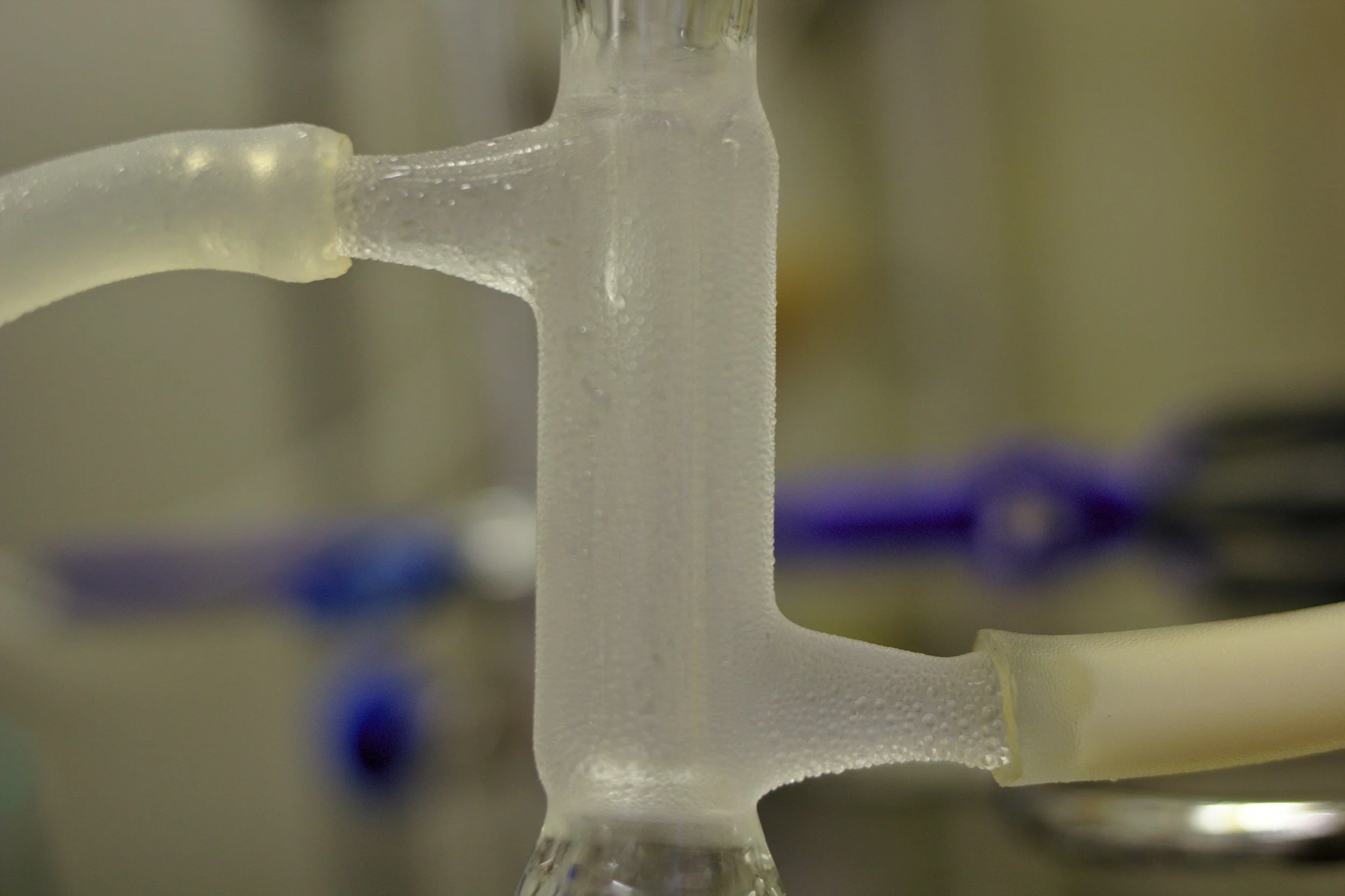
Water changes from liquid to vapor when its vapor pressure matches the surrounding pressure. As surrounding pressure decreases, water can transition to vapor at a lower temperature. This is a basic thermodynamic relationship and helps explain why pressure conditions matter in moisture movement and drying potential. (Purdue Chemistry Demonstrations)
In commercial roofing, “drying out” is typically evaporation and vapor transport, not liquid water boiling. Drying rate depends on temperature, air movement, and the difference between the moisture in the assembly and the moisture the air can hold. The practical takeaway is that pressure and air exchange can improve conditions that allow moisture to leave an assembly as vapor. (Purdue Chemistry Demonstrations)
Moisture impacts more than leaks. It can materially reduce insulation performance in service, which is why moisture conditions influence both scope and energy outcomes. (ScienceDirect Review)
When intrusion is severe, teams often default to tear-off or selective removal and replacement to restore performance where needed. On qualified recovery scopes, wind-vented assemblies also allow a practical upgrade path: additional insulation and cover boards can be installed before the new membrane, helping restore or improve the roof’s thermal package while keeping the scope aligned with project goals, code requirements, and documentation needs.